As part of its solar PV deployment in Dubai, the customer required a reliable monitoring and control system across multiple distributed sites. The solution needed to provide centralized control of the PV systems while supporting the monitoring and operational requirements associated with the D33 Solar PV initiative.
With multiple PV sites, inverters, weather monitoring equipment and power measurement devices involved, the project required a consistent control architecture that could manage the different field systems and provide the required interface with the utility control system.
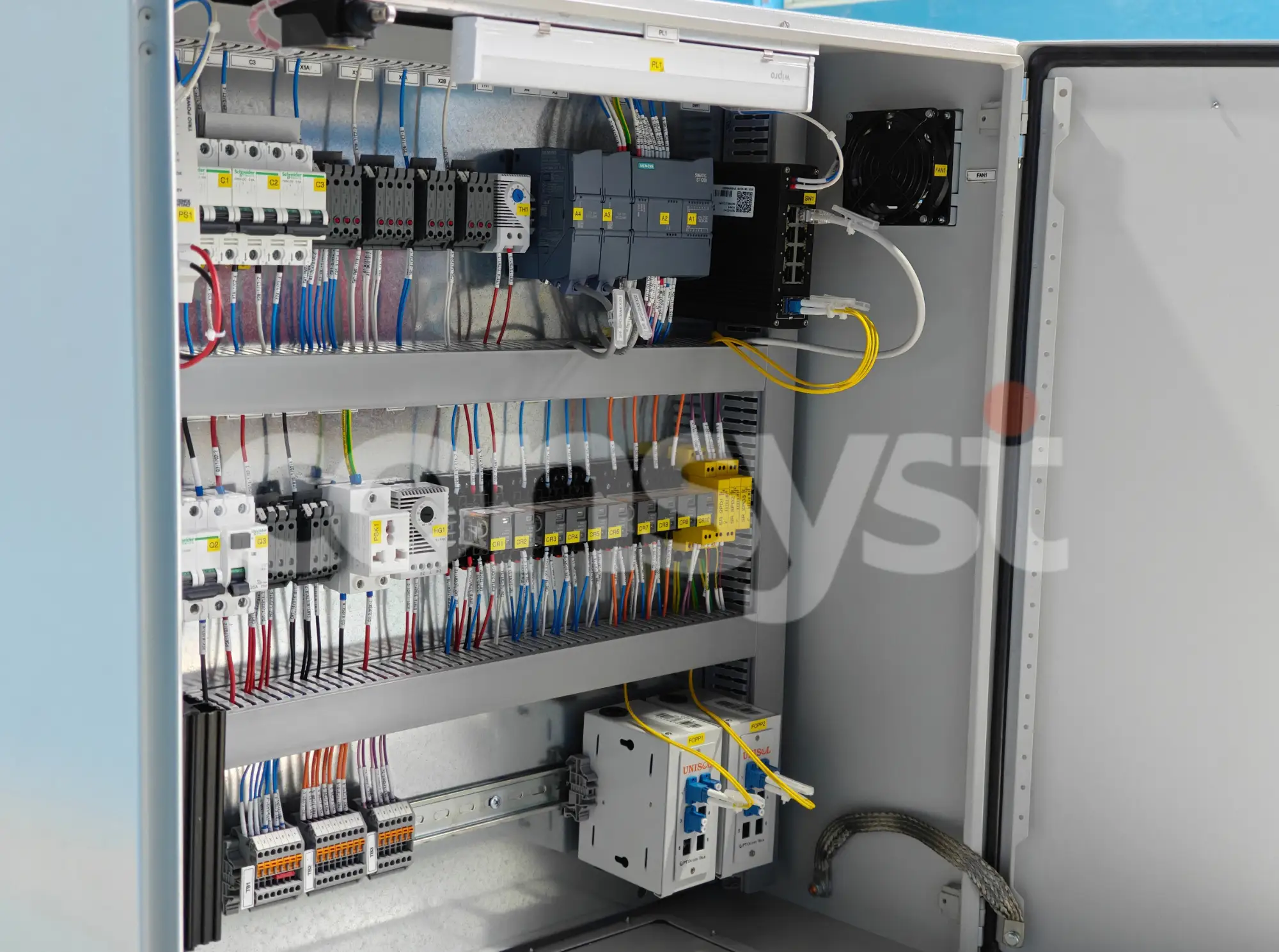
Consyst was engaged to design, engineer, supply and commission the RTU and PPC panels for three solar PV sites, providing the control and communication infrastructure required for reliable plant monitoring and power management.
THE CHALLENGE
The project involved integrating equipment and monitoring systems across multiple PV sites while maintaining a common approach to plant control and communication.
The key requirements included:
- Monitoring and communication with PV inverters and field devices
- Integration of power measurement and weather monitoring systems
- Coordinated control of PV generation based on site load and grid conditions
- Support for zero-export operation
- Interface with the utility’s SCADA system for remote monitoring and control
- Consistent RTU and PPC panel design across multiple locations
The control system also needed to respond appropriately to changing generation and load conditions, including reducing PV generation when export conditions occurred and increasing generation when additional solar power could be utilized.
THE SOLUTION
Consyst designed and supplied a multi-site RTU and PPC-based monitoring and control solution for the solar PV installations.
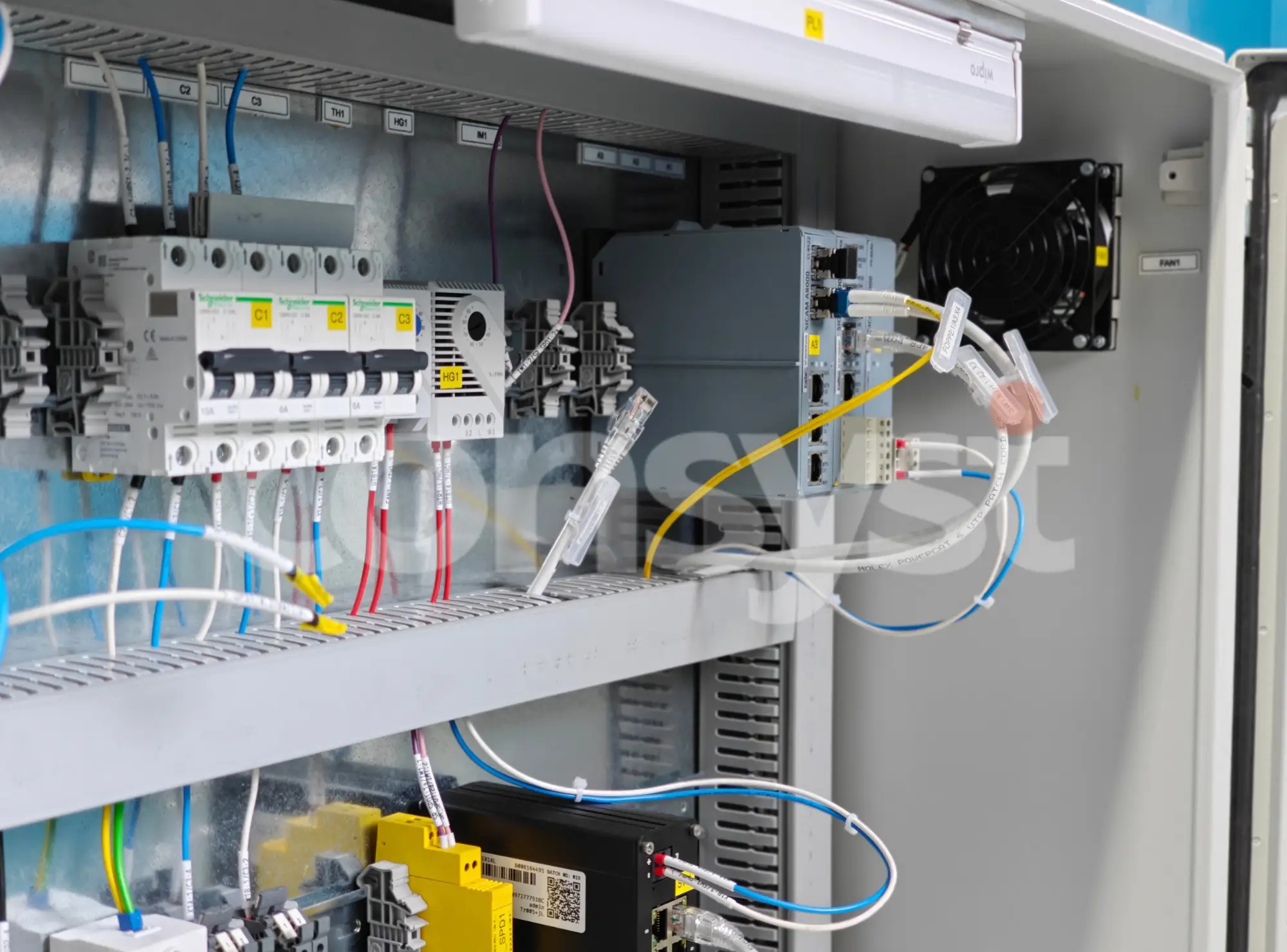
The solution included the engineering and supply of 19 RTU panels across three sites, along with three PPC panels for plant-level control. The RTUs provide the interface between field equipment such as PV inverters, power meters and weather monitoring systems and the plant control system.


Integrated Monitoring & Control Architecture
The architecture establishes a structured communication path from field devices through the RTUs to the PPC and utility SCADA system.
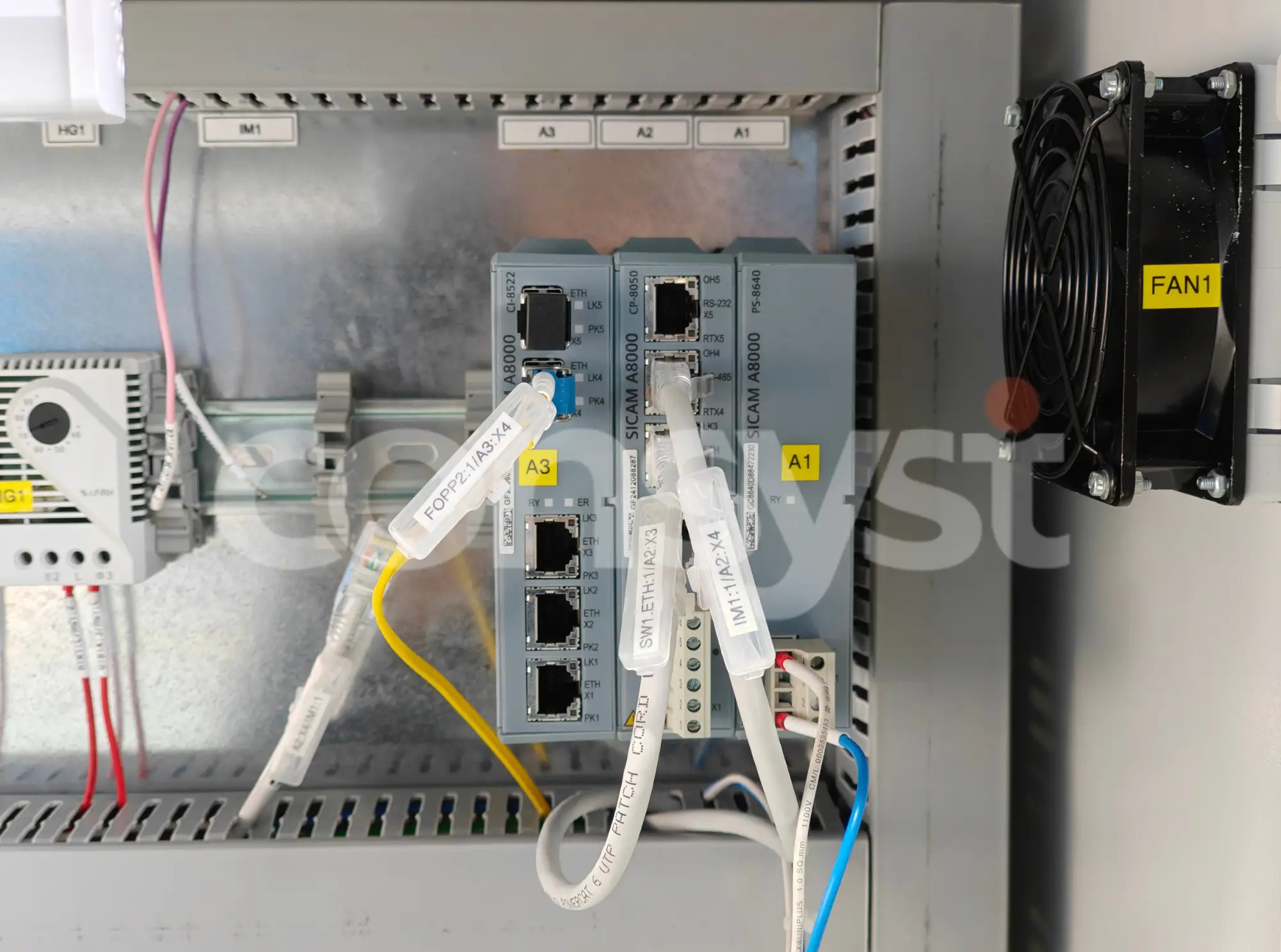
Siemens S7-controllers are used at the RTU level, supported by Siemens A8000-based PPC/RTU equipment and industrial Ethernet switches. Communication with field equipment is implemented using Modbus RTU, Modbus TCP/IP and fibre-based Ethernet, while IEC 60870-5-104 provides the interface with the utility SCADA system.
The architecture also incorporates dedicated interfaces for inverter data, POC measurements, protection signals and weather parameters, allowing electrical and environmental information to be brought together within the plant control system.
POC-Level RTU to PPC Communication Architecture

Intelligent Plant-Level Power Control
The PPC provides the central control layer for managing PV generation in response to plant load and grid conditions.
A key function is zero-export control, where real-time measurements from the bidirectional POC meter are used to determine the required inverter response. When PV generation exceeds site demand and export is detected, the PPC initiates-controlled curtailment. When site demand is higher than PV generation, the PPC can increase PV output within the permitted operating limits.
The PPC also supports remote active power setpoints from the utility SCADA system, enabling centralized adjustment of plant generation. Frequency-based curtailment is incorporated into the control philosophy to provide the required response to grid-frequency conditions.
Active & Reactive Power Control
The PPC also supports active power control through either commands received from the utility SCADA system or internal control logic. The control commands are passed through the RTU to the PV inverters to regulate their output.
Reactive power control was similarly incorporated, allowing the system to respond to external utility commands or operate based on predefined internal conditions.
Utility SCADA & Operational Visibility
The PPC provides the communication gateway between the PV installations and the utility control centre through IEC 60870-5-104.
Plant measurements, equipment status, alarms and control signals are consolidated at the PPC level, providing a unified operational view while allowing authorized remote commands to be distributed to the relevant plant equipment.
The solution was designed around the operational requirements of the D33 Solar PV Initiative. DEWA’s D33 requirements provide for PPC-based monitoring and control of PV inverters, including active and reactive power control and remote interaction with DEWA control centres.
Learn More About Our Solar SCADA & PPC Solutions →
OUTCOMES FROM THE PROJECT
Multi-Site Solar PV Monitoring & Control:
A standardized RTU and PPC architecture enabled consistent monitoring and control across three geographically distributed solar PV sites.
Controlled Solar Power Utilization:
The implemented control logic enables the PV system to respond to changing generation and load conditions, including ramp-up and curtailment actions required for zero-export operation.
Utility SCADA Integration:
The PPC-based architecture provides an interface for receiving control commands from the utility SCADA system and passing the required commands to the PV plant equipment. This aligns with DEWA’s D33 monitoring and control framework.
Centralized Plant-Level Control:
The PPC provides plant-level coordination of PV inverter operation, while the RTUs provide the field-level interface with the connected equipment. This creates a structured control architecture across the different solar PV sites.
Ready for D33 Operational Requirements:
The solution was engineered around the monitoring and control requirements relevant to the D33 Solar PV Initiative, including active power regulation, reactive power control and zero-export operation.
THE RESULT
The project delivered a standardized monitoring and control solution across three solar PV sites, providing an integrated interface between field equipment, plant-level control and utility SCADA.
THE SOLUTION ENABLES
- Centralized plant monitoring
- Reliable inverter and field-device integration
- Coordinated active power control
- Reactive power management
- Controlled PV generation for zero-export operation
- Utility SCADA-based plant control
- Secure industrial communication infrastructure